
Flag Stories
The Colours of Morocco
August 11, 2026
The oldest university in the world still teaching is not Oxford. It's not Bologna. It's al-Qarawiyyin in Fez, Morocco, founded in 859 AD, and here's the detail that should be famous: it was founded by a woman, Fatima al-Fihri. While Europe was in its darkest centuries, Fez was handing out degrees. Morocco has been underestimated for 1,200 years and counting.
Where it all began
Berber, Amazigh, kingdoms traded with Carthage and Rome (the mosaics at Volubilis still glow in the sun). From the 8th century, dynasties built imperial cities, Fez, Marrakech, Meknès, Rabat, each a capital in its turn, and Almoravid armies once ruled from the Sahara to Spain; Andalusia's palaces have Moroccan fingerprints all over them. A detail for your next dinner party: in 1777, Morocco became one of the first states in the world to recognise the newborn United States, and the Moroccan-American friendship treaty of 1786 is among the oldest unbroken treaties in US history. Independence returned in 1956, under a monarchy whose line stretches back to the 17th century.
The minds
Ibn Battuta of Tangier out-travelled Marco Polo three times over, 29 years, some 120,000 kilometres across Africa, Arabia, India and China in the 1300s, then dictated the greatest travel book of the medieval world. Leo Africanus described Africa to Europe. The novelist Tahar Ben Jelloun took France's Prix Goncourt in 1987; Leila Slimani followed in 2016. Paul Bowles recorded and archived Moroccan music for the world, and Gnawa, the hypnotic spiritual music descended from sub-Saharan brotherhoods, is now UNESCO heritage with its own world-famous festival in Essaouira every June.
Made in Morocco
Morocco holds roughly 70 percent of the world's phosphate reserves, the ingredient global agriculture cannot function without; in a real sense, Morocco helps feed the planet. Argan oil comes only from trees growing in one Moroccan region, goats climb them, that photo is real, and cooperatives run by women press it for the world's kitchens and cosmetics. Add Europe's winter vegetables and citrus, hand-knotted rugs that collectors hunt, leather from the Fez tanneries operating since the Middle Ages, and one of Africa's biggest car-manufacturing hubs in Tangier, plus the massive Noor solar complex at Ouarzazate, among the largest on Earth.
Where to go
Marrakech: the Jemaa el-Fnaa square at dusk, when storytellers, drummers and food stalls turn a plaza into an opera, then the souks, the Bahia palace and a rooftop mint tea. Fez, the world's largest car-free urban area, a 1,200-year-old maze where donkeys still deliver, follow a guide, get gloriously lost anyway. Chefchaouen, the blue city in the Rif mountains, painted a hundred shades of one colour.
Then the wide country. The Sahara at Merzouga: camel or 4x4 into the Erg Chebbi dunes, sleep in a camp, wake for a sunrise that resets your factory settings. Aït Benhaddou, the mud-brick fortress town of Gladiator and Game of Thrones fame. The Todra Gorge's 300-metre walls. Essaouira's windy ramparts and fish grills. And the High Atlas: hike Berber valleys around Imlil, or summit Toubkal, North Africa's highest peak at 4,167 metres, with mint tea waiting in a village on the way down.
Culture, on a plate and in the ear
The tagine is both the pot and the poem: lamb with prunes, chicken with preserved lemon and olives, slow-cooked until argument becomes agreement. Couscous on Fridays, harira soup at sunset in Ramadan, msemen flatbreads off the griddle, and mint tea, Berber whisky, poured from a height as both skill and welcome; refusing a third glass is technically legal, socially unwise. The hammam is a weekly rite. And everywhere the phrase marhaba, welcome, backed by a hospitality culture where a guest is sacred. You will arrive a tourist and leave a cousin.
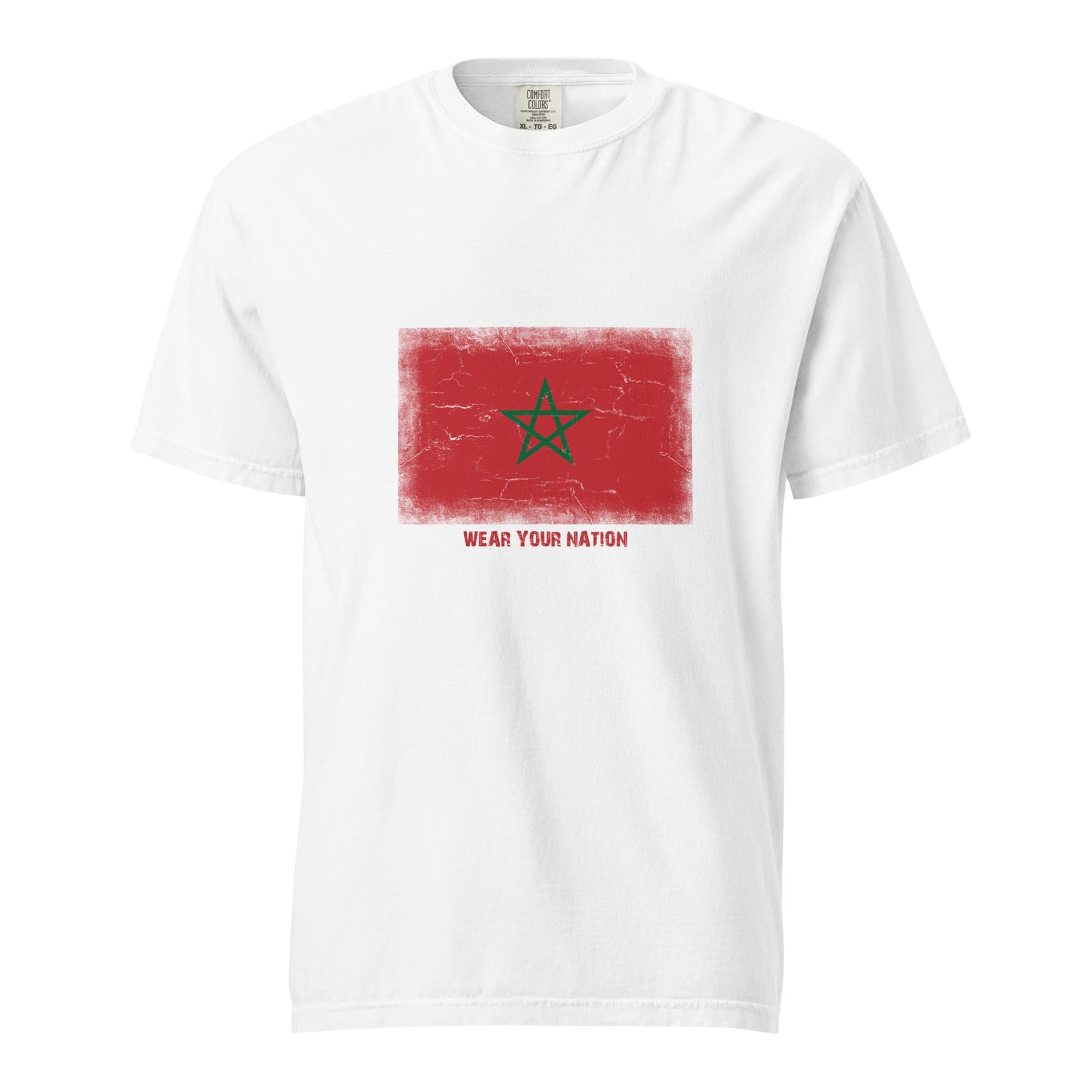
Every colour is someone's home. I print it the way memory keeps it: vintage-washed, distressed, made to order.
Shop the Morocco tee · the hoodie · Travelers · Sleeve Badge
P.S. Deep red for the dynasty, and the green five-pointed seal of Solomon at the centre: faith, wisdom, and 1,200 years of knowing exactly who you are. Find your flag.
Get the next story
One flag at a time — early access & new drops included.